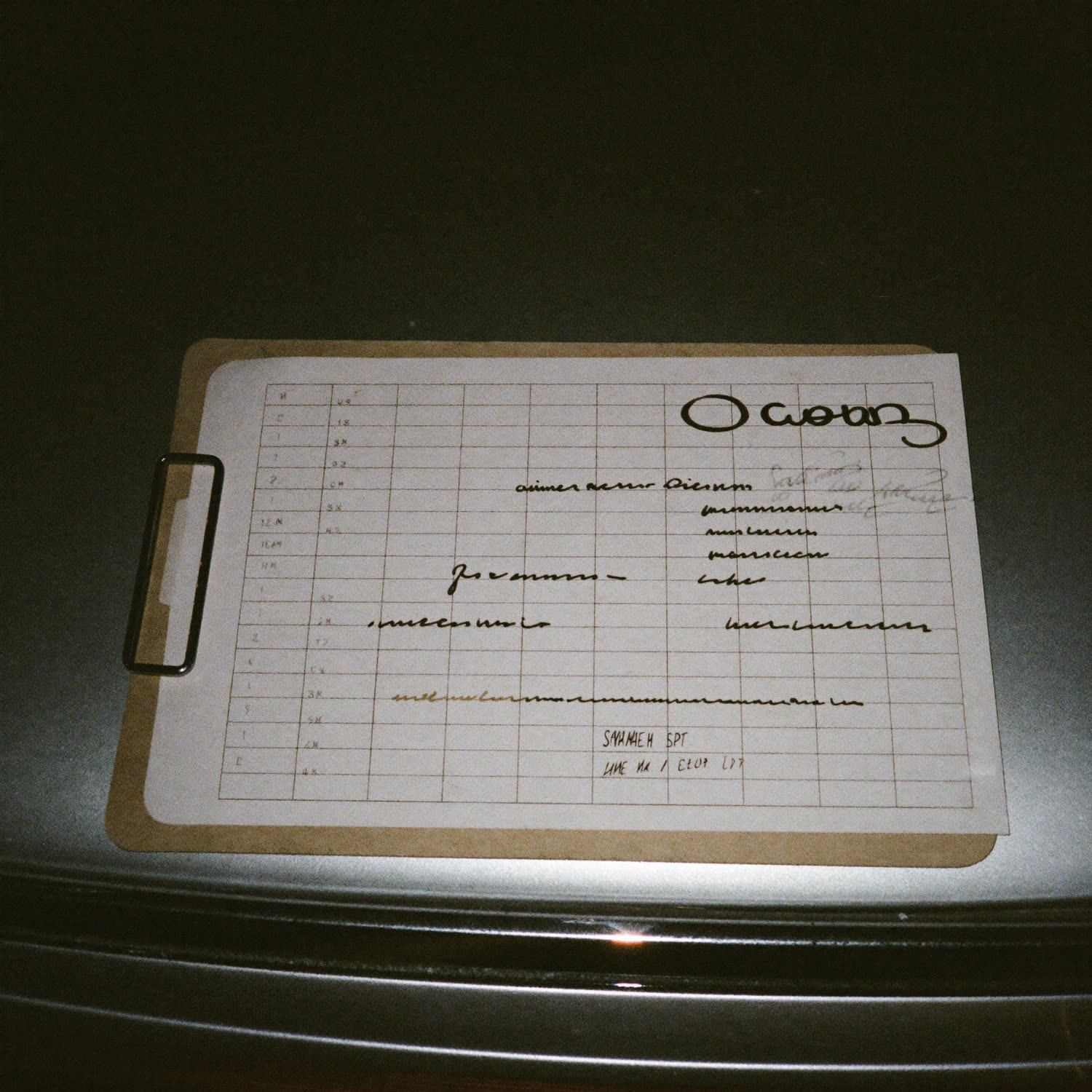
OM 314 · THIRD FLOOR · NO SIGN FOR IT · TWENTY-TWO CHAIRS · NINE OF U
Reported
The city runs a free three-hour class on rats. Nine of us went. Nobody was told what happens in the third hour.
Words — R. Meel · Pictures — the room
CITY · Nº 09 · RATKING · THE VERMIN NUMBEROM 314 · THIRD FLOOR · NO SIGN FOR IT · TWENTY-TWO CHAIRS · NINE OF U
There is no sign for it. You ask at the desk on Gold Street and the woman says rats? without looking up, and points at the elevator with a pen.
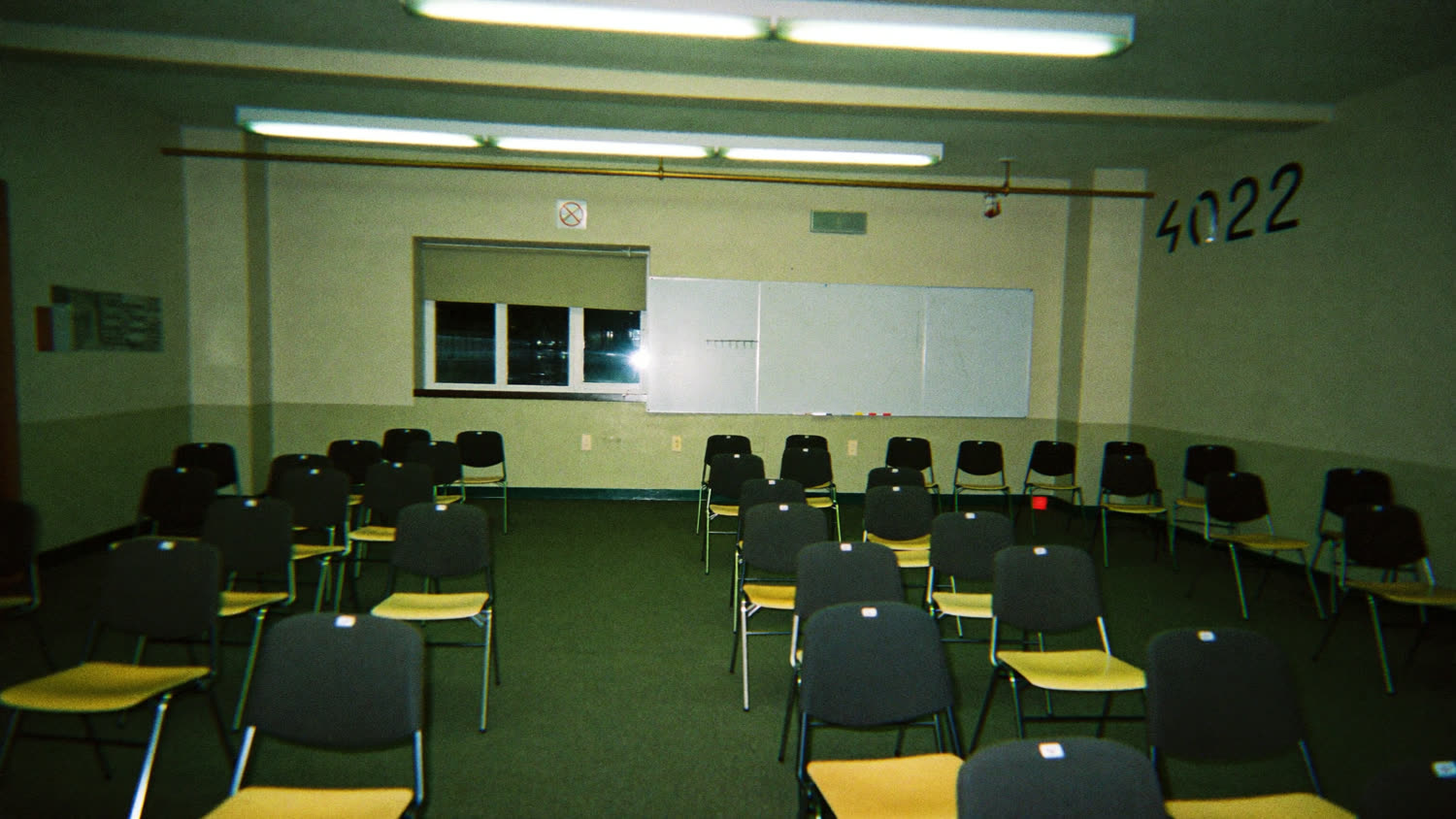
Third floor. Room 314. Twenty-two stacking chairs in rows that do not line up, a whiteboard somebody has half-erased, and a window with the blind pulled to about eye level so all you can see is the legs of the building opposite.
There are nine of us. A super from Inwood who has brought a folder and keeps it closed on his knees the whole time. Two men from the same management company who sit four seats apart and do not acknowledge each other once in three hours. A woman in a green coat who, when we are asked to say why we came, says: “I'd rather not.” Nobody makes her.
The instructor is called Dana. Eleven years. She opens by telling us she is not going to teach us how to kill rats.
“Everybody comes for that,” she says. “That's the last hour. The first two are garbage.”
And it is. Two hours on garbage. Bag thickness in mils. The four-inch gap under a roll-down gate that is apparently the difference between a block with a problem and a block without one. She has a slide of a bin with a lid and a slide of the same bin with the lid resting on top rather than closed, and she leaves the second slide up for a long time without saying anything, which is more effective than anything she says.
“That's a good question,” she says, and moves on.
Somebody asks about the poison that stops them breeding. Dana says it works. Somebody else asks how you'd know. Dana says that's a good question and moves on, and I write down that's a good question and moves on.
The super from Inwood opens his folder in the second hour. It is photographs. He has been documenting a wall.
At the break there is a coffee urn and a plate of the hard little butter cookies that exist only in municipal buildings. The woman in the green coat stands by the window. I ask her, badly, whether she has a rat problem, and she says, “I have a downstairs neighbour problem,” and that is the whole conversation.
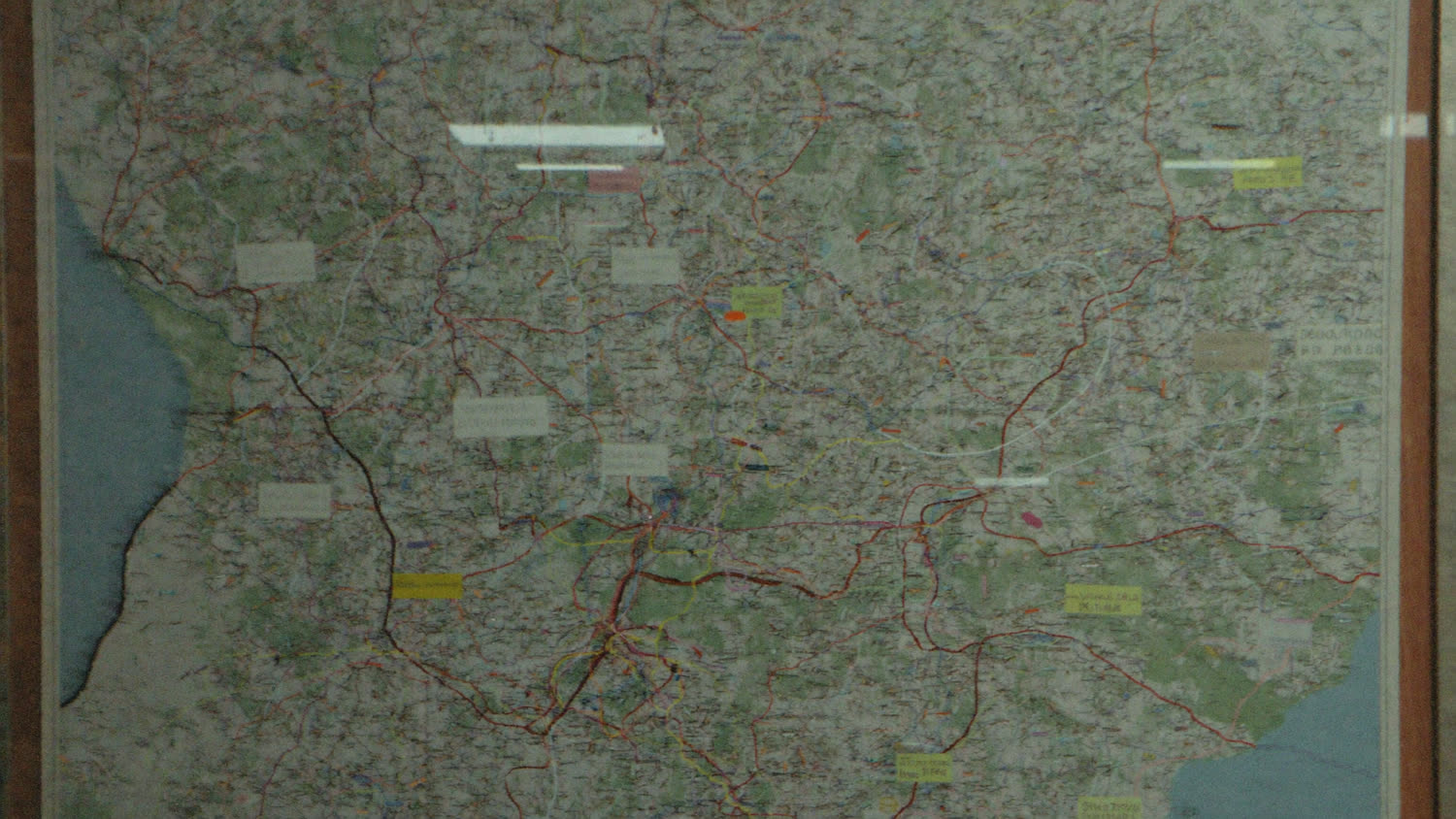
The third hour is not about killing rats either. The third hour is a man named Ferris who does not introduce himself and shows us a map.
It is the same map that is on the wall of the room next door, which I had looked at on the way in without understanding it — a street map under glass, absolutely covered in coloured pins, with small paper tags hanging off some of them. Ferris explains the colours. Red is a confirmed burrow. Blue is a complaint with no burrow found. Yellow, he says, is “historic.”
Somebody asks how far back historic goes.
“It varies,” says Ferris.
The pins are not evenly spread. There is a shape in them, and once you see it you cannot stop seeing it: a long dense band running roughly north-east, thinning at both ends, with a hole in the middle of it about four blocks across where there is nothing at all. Not one pin.
I ask about the hole.
Ferris looks at it for a while, in the way you look at a word you have written down that has stopped looking like a word.
“That's the reservoir,” he says. Then: “No. Sorry. That was the reservoir.”
He does not say what it is now, and the class ends four minutes early, and in the elevator down the two men from the management company stand at opposite corners and the super from Inwood asks me, without any preamble, whether I want to see the wall.
CITY · № 09 · Ratking
Rat Academy runs monthly and is free. There is no test and no certificate, which several attendees seemed disappointed by.