LTENBURG 1828 · THIRTY-TWO ANIMALS · UNDER A MILL FLOO
Feature
There are about thirty of them in the world, in jars and cases, and no two experts will tell you the same thing about how they happen.
Words — R. Meel · Plate — Mus. cat. ii
SPECIMEN · Nº 02 · RATKING · THE VERMIN NUMBERLTENBURG 1828 · THIRTY-TWO ANIMALS · UNDER A MILL FLOO
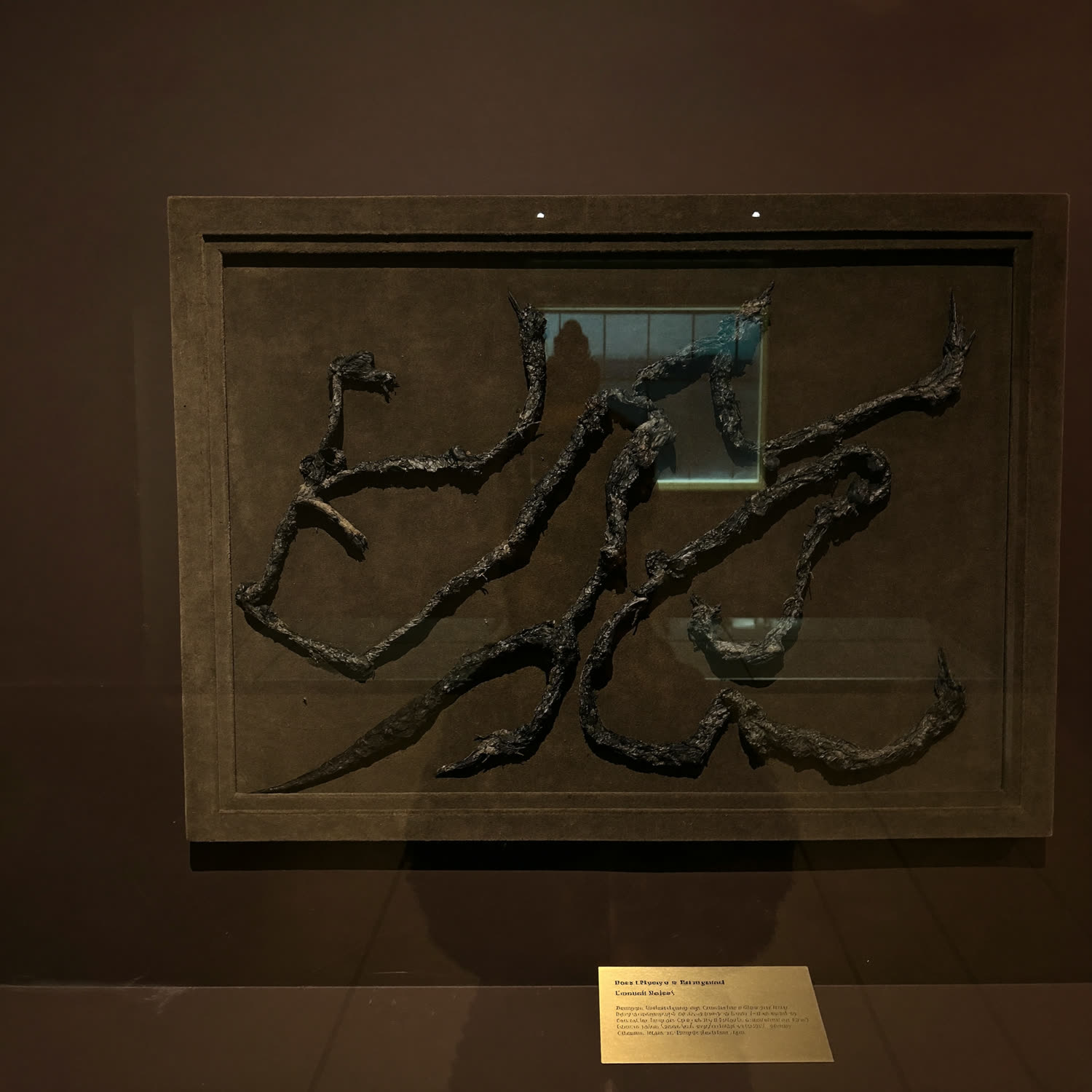
A rat king is a number of rats found with their tails knotted together into a single mass. It is not a figure of speech. There are specimens.
The one everybody cites is in Altenburg, in Germany, in a museum, in a case. Thirty-two animals. It was found in 1828 under the floor of a mill and it has been sitting in that case embarrassing people ever since.
You can go and look at it. I have not. I have looked at photographs of it for a length of time I would not defend in court.
The explanations divide into two camps and the camps do not like each other.
Nobody minds “they were all stuck.” People mind “they arranged themselves.”
The first camp says accident. Sap, ice, filth, something sticky in a nest, and then panic in a confined space, and the panic does the knotting. This is the sensible position. It requires nothing new. Its problem is that people have tried to reproduce it and cannot, and that a knot made by panic ought to loosen when the panic stops, and these do not loosen.
The second camp says the knots are made slowly. Grooming, huddling, tails wrapped for warmth over weeks in a nest too small, and the mass forms the way a dreadlock forms, which is to say not in one event.
A zoologist I spoke to, who has handled two specimens, said something I have thought about since. She said the argument is not really about rats.
“It's about whether you're willing to say a group of animals did something together,” she said. “Nobody minds ‘they were all stuck.' People mind ‘they arranged themselves.'”
The specimens are mostly young. That is agreed on and it is the one fact everyone cites and nobody explains. Young animals, in a nest, in winter, in a wall.
There is a thing about a knot that is worth sitting with, whichever camp you fall into.
No rat in a rat king is the king.
There is no centre. Pull on any one of them and the whole arrangement moves, badly, in a direction that none of them chose and none of them can undo. Every one of them is a hostage and every one of them is a captor and none of them did it on purpose, probably, and they will all die of it.
This is the closest thing to an organisational chart that vermin have produced and it is still better than most.
The last confirmed find was in Estonia in 2005, in a shed, and the man who found it — a farmer — killed them, which everybody in the field will tell you was the wrong decision and everybody in the field will also tell you they would have done the same.
SPECIMEN · № 02 · Ratking
Plate ii is reproduced from a natural history sheet of uncertain date, in the collection.