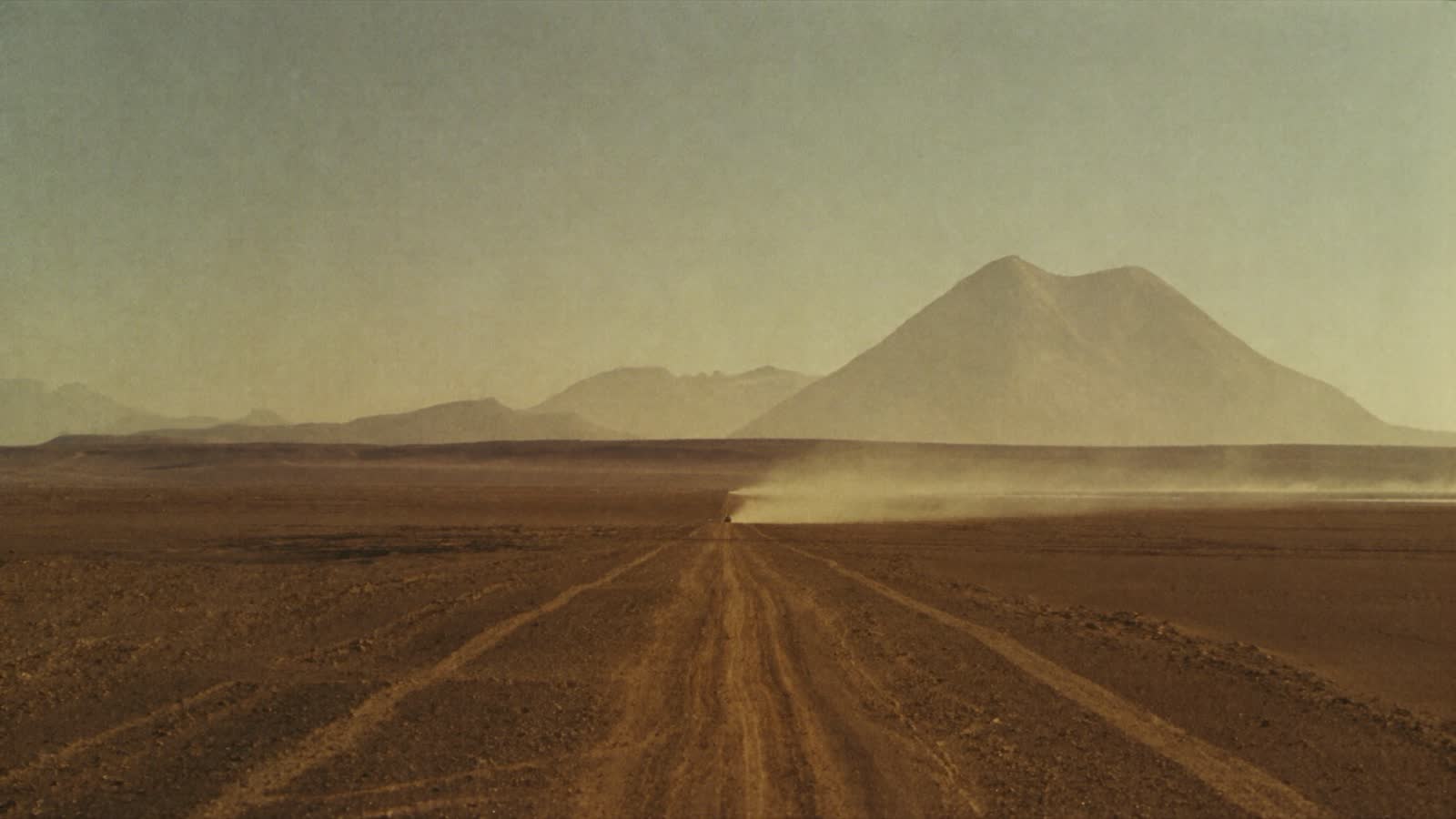
A single dirt road running dead straight across a dust-coloured plateau toward a volcanic cone, one small vehicle raising a long plume.

ATALAYA

24° 11′ 06″ S  /  69° 52′ 41″ W  /  3 410 M

Local  /  sidereal

Sun  /   /  dome

Scroll to arrive  /  frame 001 / 96

An observatory in the Atacama
and the people who live below it

Elevation
3 410m
Clear nights
317/ yr
Median seeing
0.62
Residents
11max
I
The road in

218 kilometres from
the coast, the last
41 of them gravel.

You leave the coast highway at sea level and climb for about four hours. The paving stops at Km 177. After that it is graded gravel, maintained by the station itself with a grader it has owned since 1981.

The drive is the main reason visits here are rare. A truck from Antofagasta takes most of a day in each direction, so supplies arrive once a week and people arrive once a month. Staff work in shifts of 28 days, and most spend the first two of them sleeping badly while they adjust to the altitude.

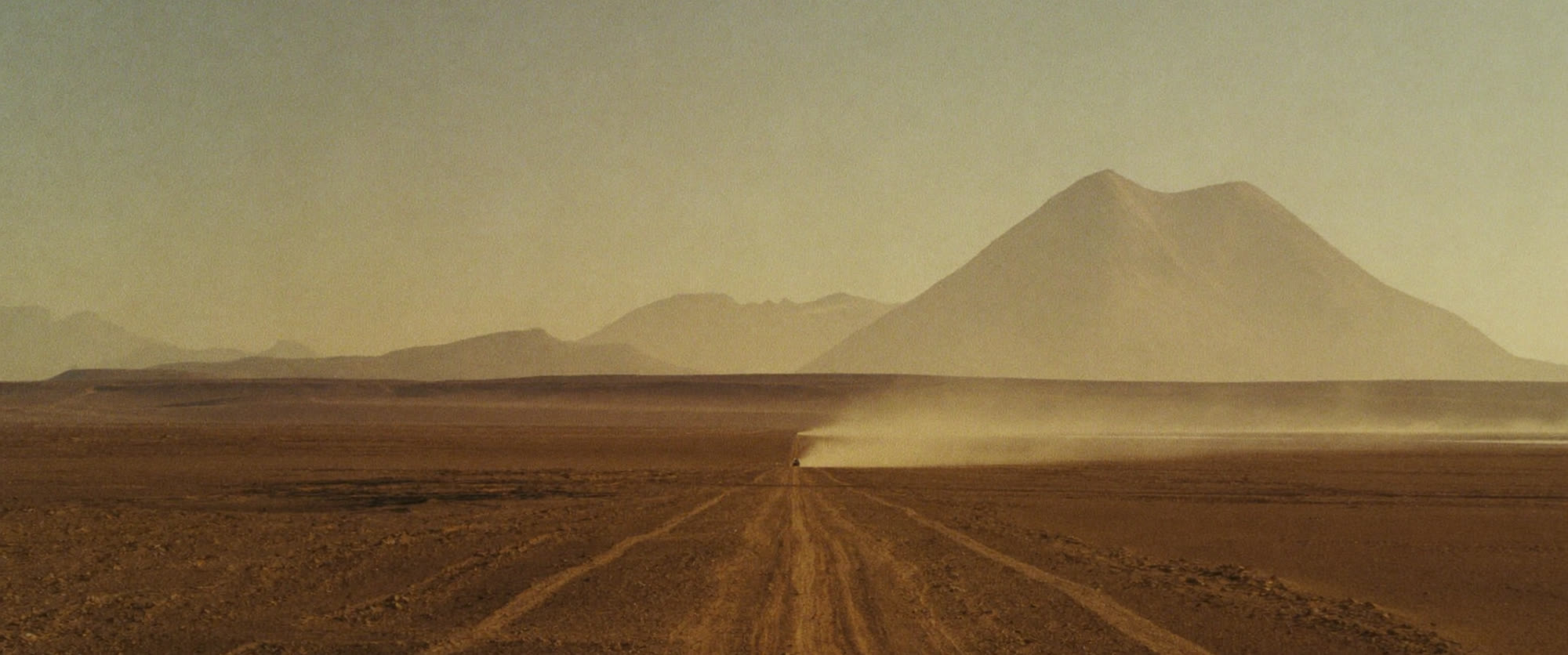
The approach road seen from a rise, a vehicle far ahead trailing dust across the plain.
Km 191, looking east. You see the dust long before the vehicle. On this stretch an approaching truck is visible for about twenty minutes.
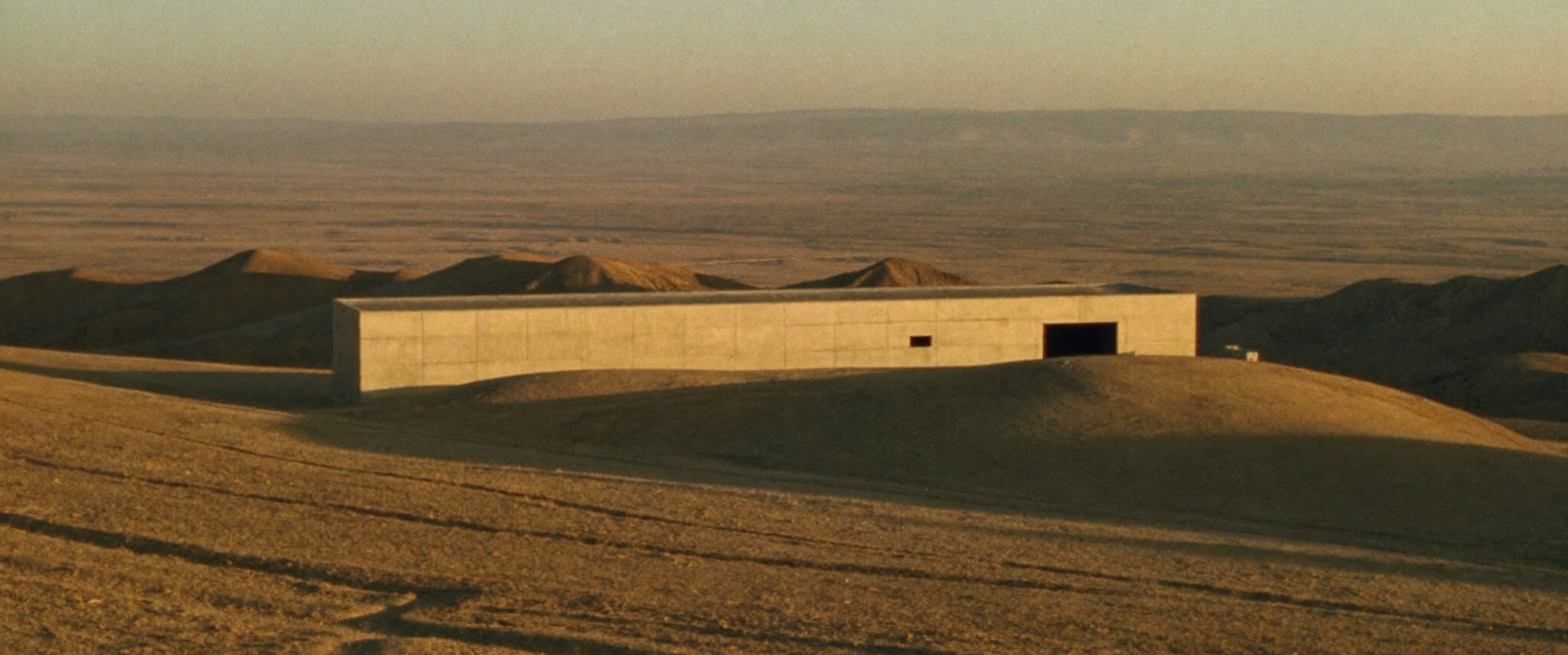
A long, low board-formed concrete building set into a ridge above an enormous pale desert basin at low sun.
II
The station

Built 1974
Rebuilt 1998
74 m long

One building, 74 metres
long, dug into the slope.

The station is a single bar of board-formed concrete set into the north slope of the ridge, so that three of its four sides are against earth. The earth is the insulation. The fourth side faces the basin and is mostly glass.

Inside there are eleven bedrooms, a kitchen, a common room, a workshop and a garage. The garage is also the entrance: vehicles pull in at the east end and you walk through it to reach anything else. Each bedroom has a bed, a desk, a chair and a two-metre window with a blackout shutter, because most of the people here sleep during the day.

Inside the station

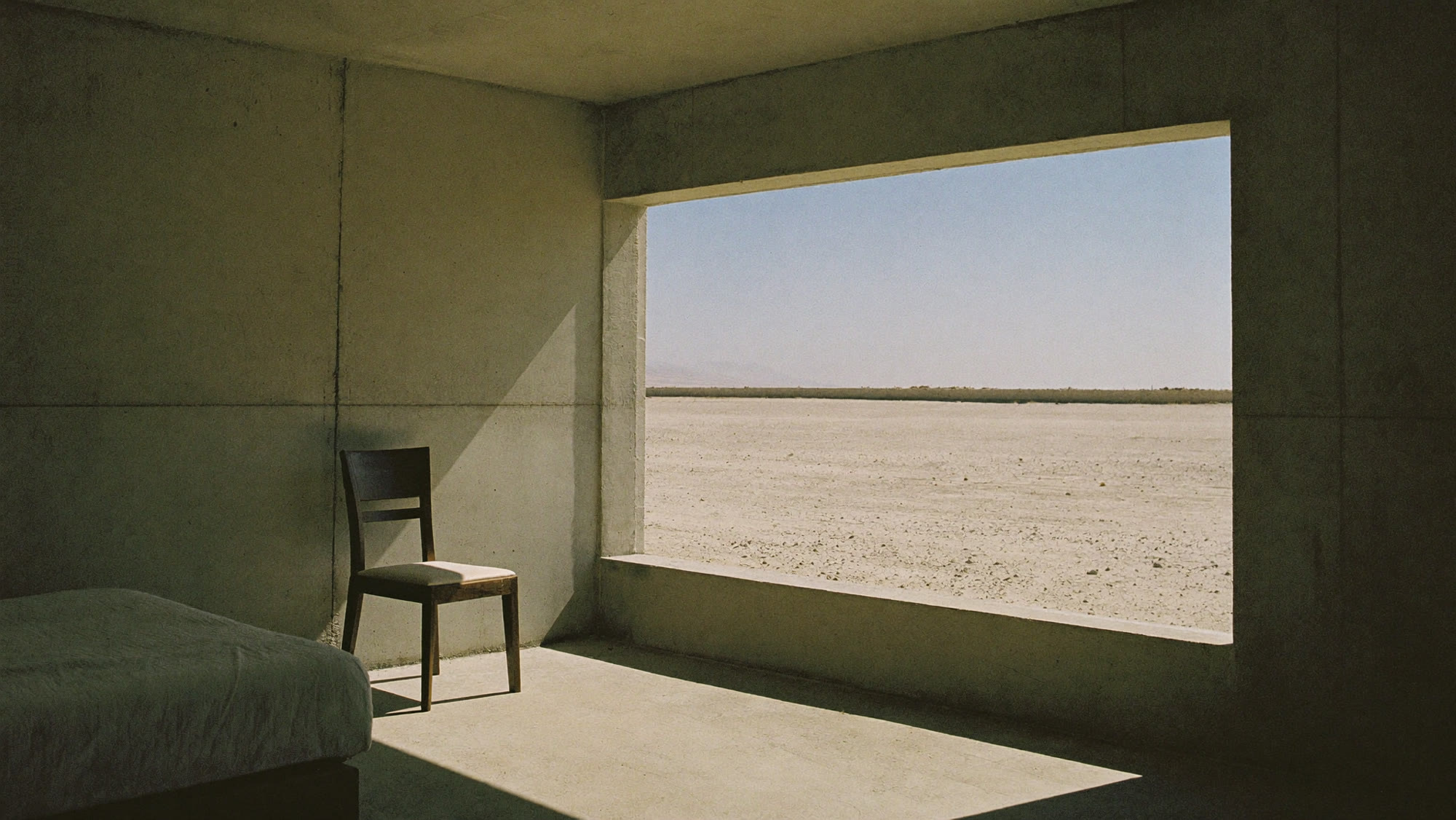
A bare concrete room with a bed, a wooden chair, and one enormous window looking out onto flat pale desert.
Room 6 at two in the afternoon. The window looks north-west toward the Salar de Punta Negra, about ninety kilometres away. It does not open.
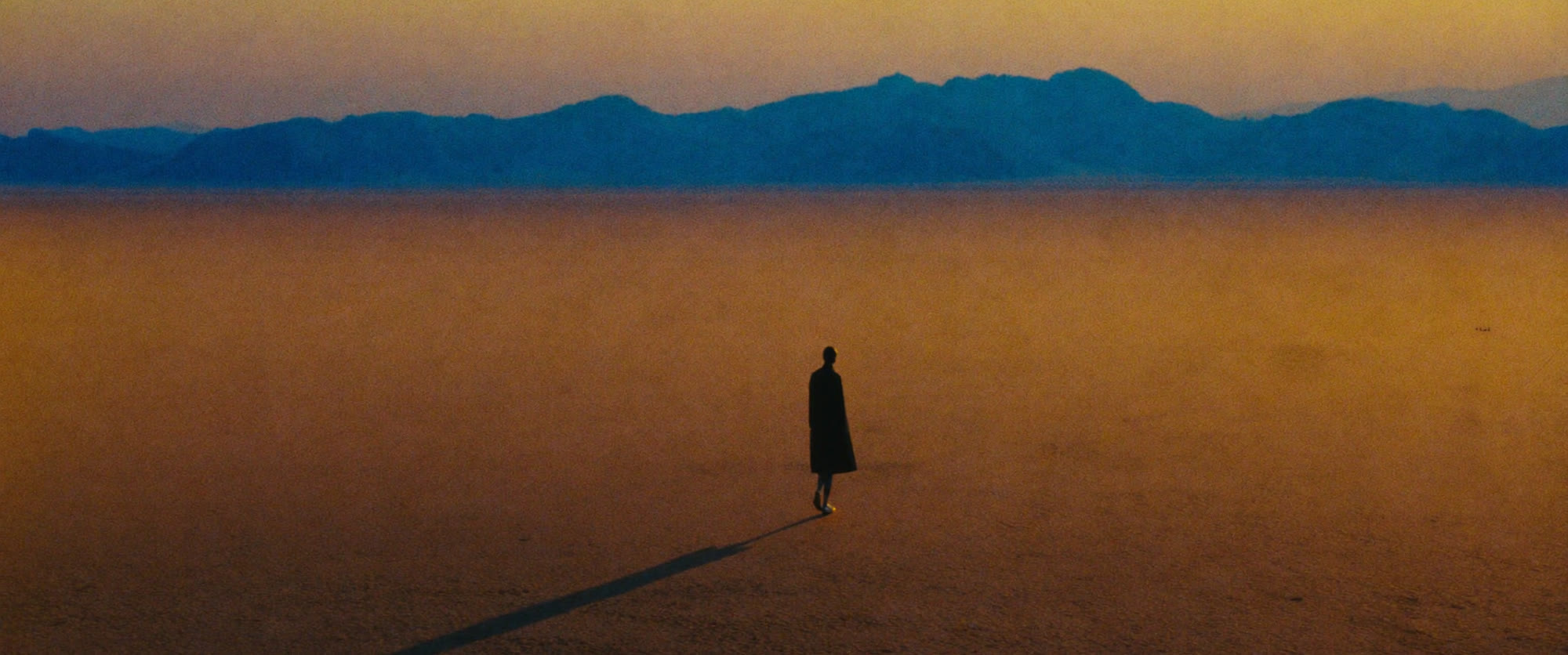
A single small figure walking across an empty plain at dusk, casting a very long shadow.
The track from the station up to the enclosure is 2.4 km and climbs 400 metres. It takes about forty minutes on foot, and most staff walk it at least once a day.
III
The instrument
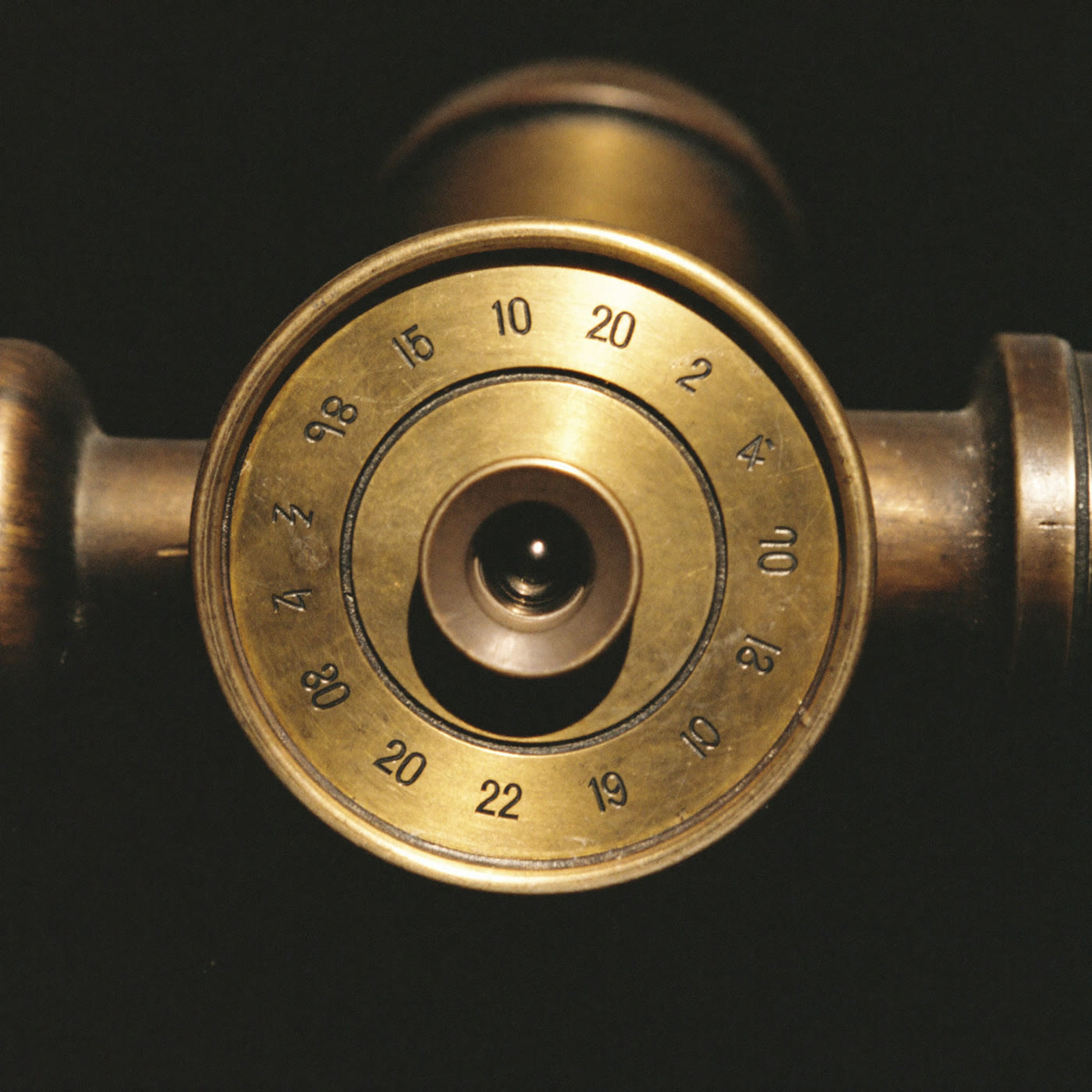
Close detail of an engraved brass setting circle on an old telescope mount, warm light raking across the numerals.
The declination circle from the original 1974 mount. Setting circles were how you aimed a telescope before encoders — you read the coordinates off the engraving by lamplight. This one was kept through the 1998 rebuild and is no longer used for anything.

A 3.6-metre mirror, and
ten kilometres of air
in the way.

Light from a star travels for thousands of years and then spends its last few milliseconds crossing the Earth's atmosphere, which is where it gets spoiled. Moving air bends it, so a star that should be a point of light smears into a small disc. The width of that disc is called the seeing, it is measured in arcseconds, and at a good observatory it runs around one. Here the median is 0.62.

Nearly everything about the buildings exists to protect that number. The enclosure opens at sunset so the mirror can cool to the outside temperature before the first exposure; 34 vents open and shut to keep air moving through the chamber; and the observing floor is structurally separate from the telescope's pier, so that footsteps never reach the mount.

Full specification

Aperture
3.60 m / f 2.1 primary
Mount
Altazimuth, hydrostatic
First light
12 August 1974
Seeing, best
0.31″ / 14 July 1981
Enclosure now

Scroll to run the sequence

18:41  /  shutter closedThe mirror is 12 °C warmer than the outside air. It has to match before the first exposure, so the enclosure opens early.

18:52  /  openingThe shutter takes about four minutes to run back, and the whole enclosure turns with the telescope.

19:18  /  civil duskVents open on the windward side. The chamber is now at the same temperature as the air outside it.

19:54  /  astronomicalThe sun is 18° below the horizon. No sunlight is left anywhere in the sky, and the survey starts.

20:30  /  on skyThe same eleven areas of sky, photographed over and over, about 240 nights a year since 1974.

frame 001 / 96

IV
The night log

One notebook a year
since 1974.

The observer on duty is expected to write in the logbook before going to bed. One hardbound book per year, kept on a shelf above the console; there are 52 of them now. Most entries record the conditions, what was observed and what broke.

Nobody edits them and nothing is required beyond the conditions, so a fair amount else has ended up in there over fifty-two years. It is the only record here that is not in a database, and it has never been digitised.

Read the log

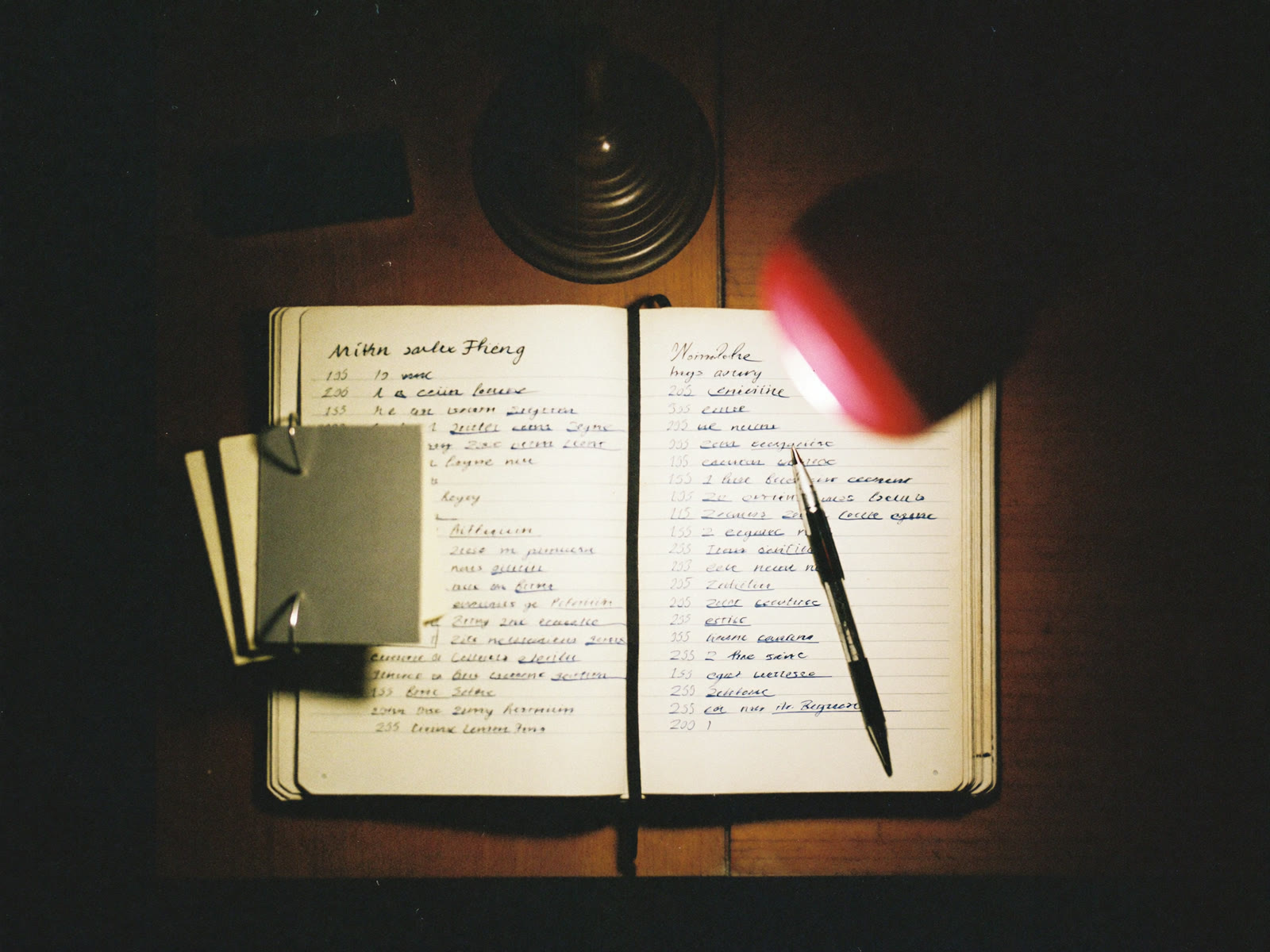
An open handwritten logbook on a desk lit only by a dim red lamp.
Volume 41, open at 2 November. The lamp is red because red light does not spoil dark-adapted vision; every lamp in the control room is the same.
1981 · 14 JUL · 04:12 Vol. 8  /  wind N 40 kt  /  −9 °C

Guiding lost at 03:40 and again at 03:58. Between the two, for about twenty seconds, the seeing went to 0.31 and I could not believe what I was looking at. Nobody awake to call. I have written the number down twice in case I stop believing it in the morning.

0.31″ is still the best seeing ever recorded at the site — about half the median. It has been questioned twice and it stands, because the strip chart from that night survived and agrees with him.
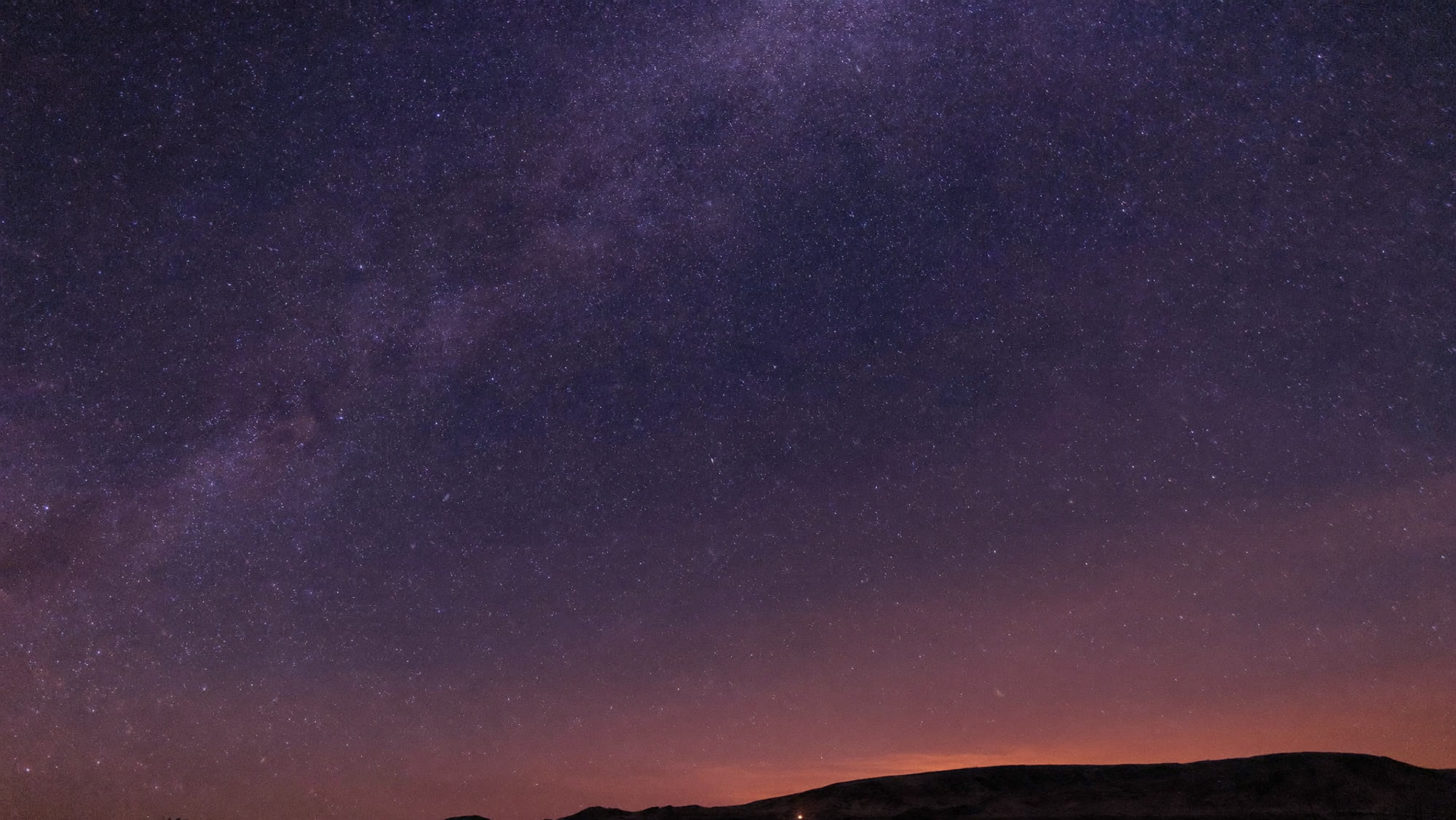
The Milky Way arching over a dark high-desert plain in a long exposure, stars dense from horizon to zenith.
V
The sky

Most of the weather
here happens
below you.

The Pacific keeps a thick layer of fog along this coast for much of the year, but it sits below about 2,200 metres and the ridge is well above it. Add almost no rainfall and you get roughly 317 nights a year with no cloud, of which 289 are steady enough to measure brightness accurately.

The practical effect at night is far more stars than most people have ever seen at once. Visitors usually say they cannot find the constellations, and they are right: the familiar patterns are drawn from the brightest stars, and here those are buried among several thousand fainter ones that are normally invisible.

The rest of the station