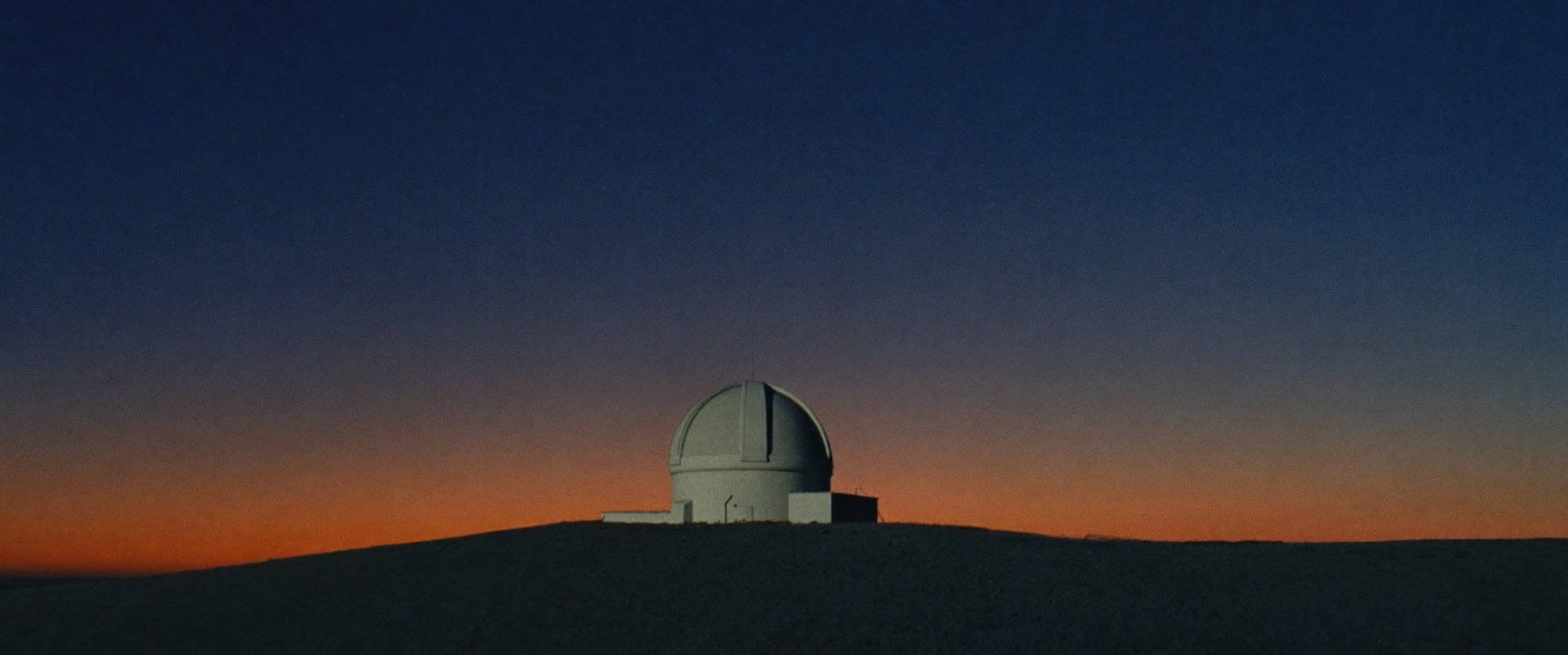
II / 3.60 m / first light 12 Aug 1974 / enclosure —
The instrument
Computed live from 24° 11′ S, 69° 52′ W
The bar is the sky above the ridge, from thirty degrees below the horizon to seventy above it, with the marker at the sun's altitude right now. The enclosure opens when the sun passes 12° below the horizon. By 18° below, there is no sunlight left anywhere in the sky, and that is when the survey starts. The position is calculated from today's date, the time and the coordinates.
The site was chosen
to protect one
number: 0.62.
Light from a distant object crosses space for thousands of years without incident, then spends its last few milliseconds in the Earth's atmosphere, which is where it gets spoiled. Moving air bends it slightly and continuously, so a star that should register as a single point of light spreads into a small blurred disc instead.
Astronomers measure the width of that disc in arcseconds — an arcsecond is 1/3600th of a degree — and call it the seeing. At a good observatory it runs around one arcsecond. At Atalaya the median is 0.62, and the height, the ridge and the 218 kilometres of road between here and anything warm are all there because of it.
So is most of the building. The enclosure opens at sunset so that the mirror can cool to the outside temperature before the first exposure, since warm glass sets up its own convection right where the light comes in. Thirty-four vents open and close with the wind to keep outside air moving through the chamber. The observing floor is structurally separate from the telescope's pier, so footsteps never reach the mount.
As rebuilt, 1998
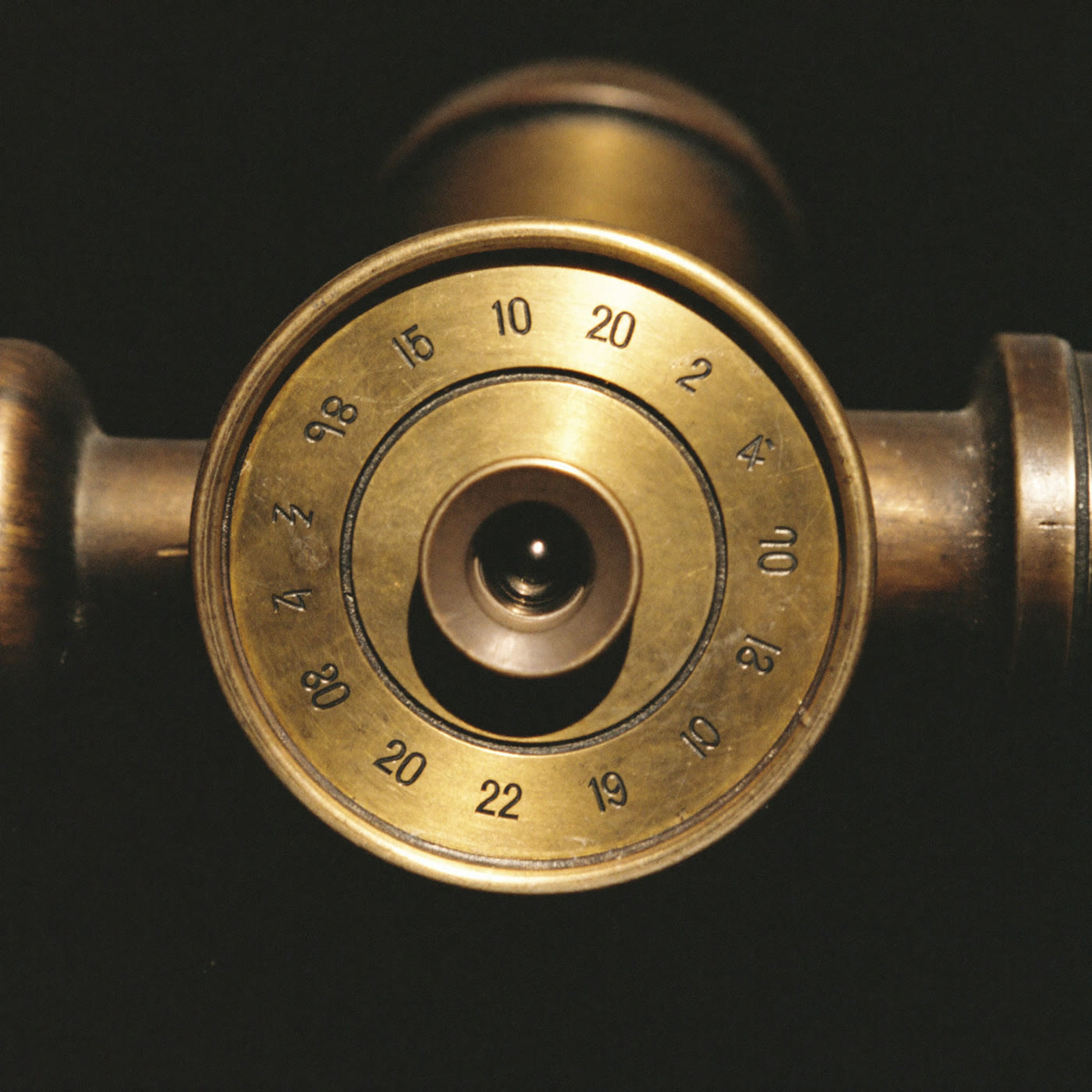
- Aperture
- 3.60 m clear
- Primary
- f / 2.1 hyperbolic / Zerodur
- Configuration
- Ritchey–Chrétien, f / 8 Cassegrain
- Mirror thickness
- 178 mm / meniscus
- Active optics
- 18 axial + 6 lateral actuators
- Figure correction
- continuous, 45 s cycle
- Mount
- Altazimuth, hydrostatic oil bearing
- Slew
- 2.4° s⁻¹ az / 1.1° s⁻¹ alt
- Pointing r.m.s.
- 0.9″ all sky
- Tracking, unguided
- 0.12″ over 900 s
- Enclosure
- 21 m co-rotating / 34 vents
- Instruments
- 3 / Nasmyth A, Nasmyth B, Cass
- First light
- 12 August 1974
- Rebuilt
- 1998 / drive, control, secondary
- Seeing, median
- 0.62″
- Seeing, best recorded
- 0.31″ / 14 Jul 1981, 03:58
- Clear nights
- 317 / yr / 289 photometric
- Power
- 340 kW / diesel + 1.1 MW array
- Enclosure, now
- —
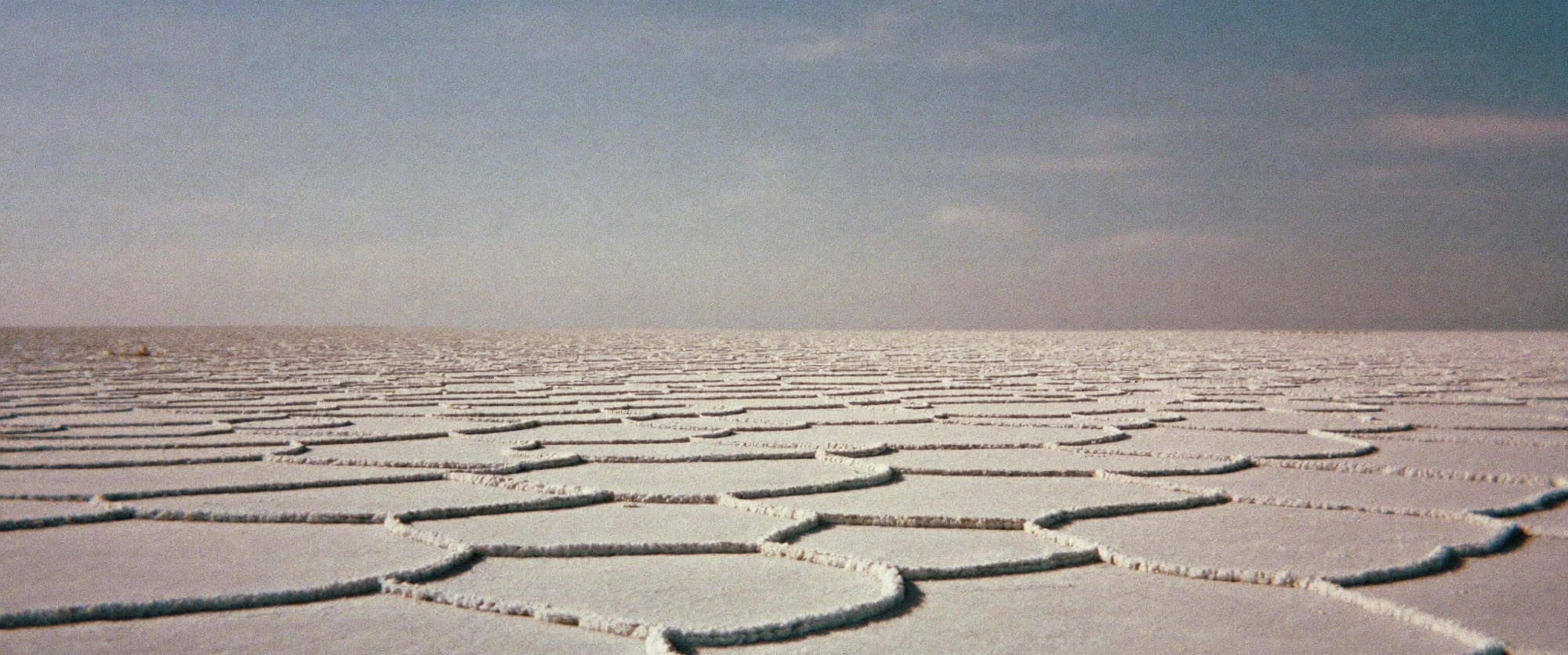
The Salar de Punta Negra, ninety kilometres north-west and eight hundred metres lower. A salt flat holds no moisture and supports no towns, which is much of why the air here is so dry and why there is no light at all on that horizon.
What it does on an ordinary night
About 240 nights a year go to one programme: photographing the same eleven areas of sky, over and over, through six colour filters. The programme is looking for anything that changes — stars that vary in brightness, planets passing in front of their stars, objects moving against a background that does not.
Any single night's images are unremarkable. What makes them worth taking is that the same telescope has photographed the same eleven areas since 1974, so a star that dimmed once in 1986 and again last March can be matched up. The programme has outlasted two rebuilds and four directors, mostly because stopping it would mean starting the baseline again from zero.
Continue